Imagine a potential customer arriving at your online store, ready to buy. They open the product catalogue, find something they like and view its image gallery. The product dimensions and materials are listed, but they cannot see what it looks like from behind because that photograph is missing. They send you a question to find out more. While waiting for a reply, they discover another online store with a more detailed presentation from different angles. They find the information they need, add the product to their cart and complete the purchase.
You may have just lost a potential customer because important product information was missing. Yet you cannot solve the problem immediately: you need to contact the team that photographed your products, arrange another shoot and order close-ups and additional viewing angles. All of that costs time and money.
The solution?
3D visualization. It enables detailed views from different angles, different materials and product options, and, with the right implementation, an interactive way to explore products directly on your website. Rather than relying exclusively on photographs taken in advance, you can give customers more information and let them explore the details that matter most to them at their own pace.
This can improve how your product is presented, reduce the need for additional photo shoots and offer customers a more engaging shopping experience. Your products have more room to show their full potential, while customers have more ways to make an informed purchasing decision.
What are 3D renders and how are they created?
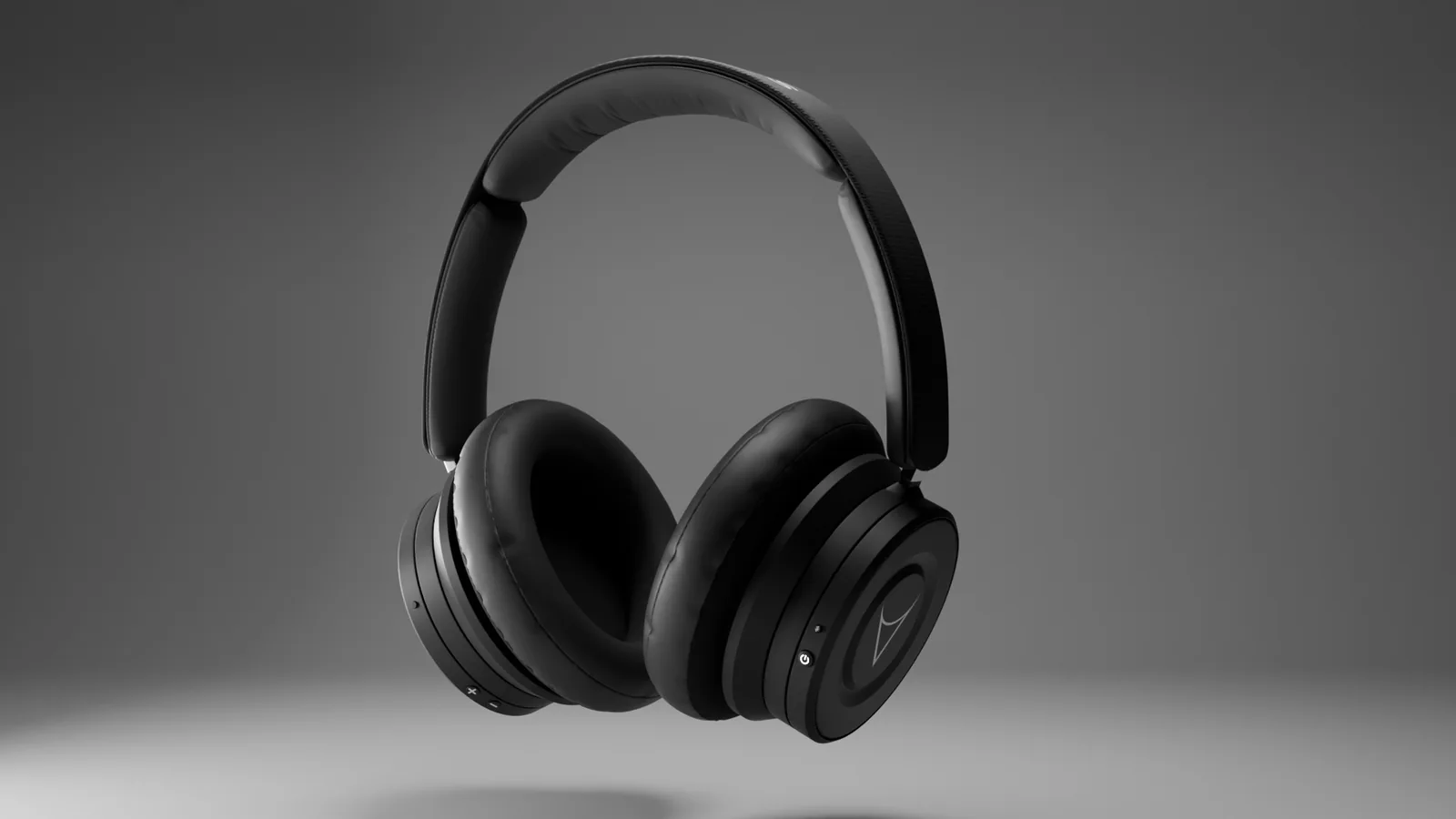
3D renders are digitally created images produced by converting a three-dimensional model into a two-dimensional view using computer software. Put simply, they are visuals made in a digital environment that can show products with a high degree of realism.
One of the main advantages of 3D rendering is the ability to create images that would be complicated or expensive to produce in the physical world. For example, a product can appear to float, be submerged in a liquid or be placed in a scene where lighting and positioning a real camera would be extremely difficult.
Another advantage is the flexibility to make changes. Once a 3D model has been properly prepared, you can adjust materials, colours, lighting and background elements without photographing the product again. This can reduce the need for additional physical shoots and speed up the creation of visuals for different marketing purposes. It also makes producing variants and adapting images for marketing channels simpler.
On the other hand, 3D rendering requires detailed product information to create an accurate model. If the measurements or details are not faithful to the real item, the finished visualization may misrepresent it and undermine the customer's trust in both the product and the business. This is why photography of a physical product remains important when its actual condition needs to be shown.
For these reasons, 3D rendering is particularly useful for businesses that want to present products in distinctive ways, show variations more easily and adapt their visual materials to marketing needs. Instead of organizing a separate shoot for every purpose, one carefully created 3D model can be the foundation for a wide range of visuals used in online stores, catalogues and advertising.
Product photography: advantages and limitations
Product photography remains an excellent choice when you need to show a product's actual appearance, textures and details in real conditions. However, with a larger catalogue or frequent changes to the range, arranging additional shoots can become time-consuming and expensive. Every new variant or design change may require more preparation, making photography a less flexible option for businesses that need many visuals adapted to different marketing channels.
One of photography's greatest strengths is that it shows the real product. Customers can see its appearance, material texture and small details. Photography is therefore a good choice when you want to present the item as it truly is. Additional images from different angles or of different variants, however, may require more time, preparation and coordination.
The choice between 3D rendering and product photography depends on the type of product, the number of variants and how you want to present it to customers.
If you have only a few products that rarely change, photography may be entirely sufficient.
If you offer many products with different materials, colours and variants, 3D rendering can be especially helpful. Models created once can form the basis for numerous additional visuals and, with the appropriate implementation, interactive product exploration on your website.
How much do 3D renders cost compared with photography?
The price of product photography and 3D rendering depends on the product's complexity, the number of images required and the level of detail needed. Photography can be more affordable when only a small number of simple products need to be captured. By comparison, 3D rendering requires an initial investment in creating the digital model, materials and lighting.
The main benefit of 3D visualization becomes more apparent when you need many products shown from several angles or multiple variants of each product. Once a high-quality model has been created, changing a variant, lighting or background is generally easier than arranging another product shoot. This can reduce costs and simplify the preparation of material for future campaigns.
For example, if you sell a chair available in ten different materials, you can show all ten variants using a single accurately prepared 3D model. With conventional photography, each variant must be prepared and photographed separately, potentially increasing production time and costs.
This is why it is important to consider more than the price of a single service. Think about long-term value and the simplicity of the process, how often products will change and how many additional views you will need for different uses.
How can you best combine 3D renders and photographs?
Despite the costs and benefits of each approach, the best option is sometimes to combine 3D rendering with photography. Photographs can demonstrate the product's real appearance, while 3D renders offer greater creative freedom and an easier way to present additional product options.
For instance, photographs may be used in an online store or product gallery, while 3D renders can be turned into more creative animations for marketing campaigns.
The same applies to lighting fixtures, jewellery and similar products where atmosphere and product variations matter. High-quality 3D animations can help attract attention, while photographs show the actual item on the online store.
Combining these approaches allows businesses to retain the credibility of photography while benefiting from the flexibility of 3D rendering. The result is a wider range of visual content for online stores, catalogues and advertising.
Which solution is best for your brand?
There is no universal solution that suits every product and brand. Photography is an excellent choice when you want to show a product's real appearance, while 3D visualization provides more flexibility for creating additional views, variants and marketing content.
If you want to improve how you present your products, simplify the display of different options and create visual content that stands out in the market, 3D rendering could be a useful next step.
At Placeholder Studios, we create 3D visualizations, animations and digital solutions tailored to your products and business goals.
Get in touch and we can work together to find the best way to present you and your products online.
Frequently asked questions
Can 3D renders look as realistic as photographs?
High-quality 3D renders can look almost as realistic as photographs. The outcome depends on the precision of the 3D model, its materials, textures and lighting. The advantage of 3D rendering is complete control over the scene and the product's presentation, while photography captures an actual physical example.
Can 3D renders replace photographs in an online store?
Yes. 3D renders can serve as a product's primary images in an online store, provided they represent the real product accurately. You can create views from different angles, show details and present different colours or materials. For additional functionality, it is also possible to implement an interactive 3D viewer that lets customers explore the product themselves.
What information is needed to create a 3D product model?
Technical drawings, dimensions, product photographs and information about materials are particularly useful for creating a 3D model. If you already have a CAD file or another suitable 3D model, it may be used as a starting point. The more precise the information provided, the easier it is to create a faithful digital representation.
Can one 3D model show different product colours and materials?
Yes. Once a 3D model has been built and prepared, its colours, textures and materials can be changed without creating a completely new model. For example, if you sell a chair available in ten materials, one model can be used to create separate images of all ten variations. This is particularly useful for furniture manufacturers, lighting brands and other businesses that offer customizable products.